10 amazing things to do on The Wild Atlantic Way – a Local’s guide
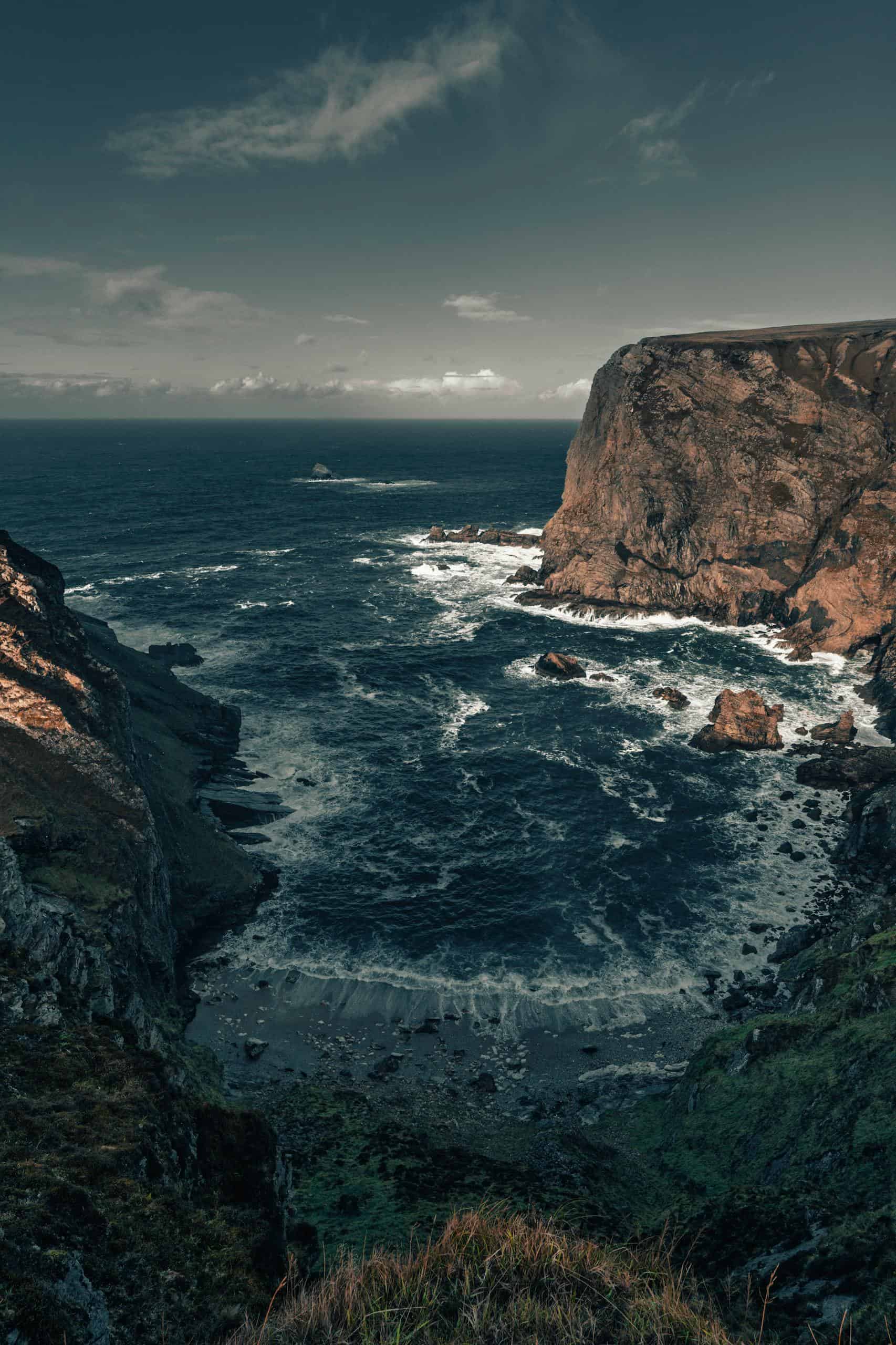
The Wild Atlantic Way is Ireland’s most renowned road trip, taking in the West coast of Ireland from Kinsale in County Cork to Malin Head in County Donegal, this has become Ireland’s most renowned route globally.
One thing visitors often underestimate about the Wild Atlantic Way however, is how long it takes to get around the route. Ireland is small in size but sparse in nature, particularly in rural areas and taking in the narrow country roads you will often find on this route, means it takes longer to get from point A to point B.
With that knowledge, it can be difficult to whittle down your itinerary to decide what you should include and what you will have to miss along the way.
We have travelled the Wild Atlantic several times, spending time in every county along the way and have fine tuned the places that we consider ‘must visit’ versus those that are nice to see.
We have picked out our favourite things to do on The Wild Atlantic Way, with everything from secret waterfalls to stunning viewpoints to make sure you get to experience the best that this incredible area has to offer.
Our Travel Checklist
These are the the things we always make sure to plan in advance before going abroad
- Booking a Hotel – We use Booking.com to get the best rates on hotels or else we book directly with the hotel themselves
- Activities – We book all of our activities through either Get Your Guide or Viator
- Travel Insurance – We use SafetyWing to get the best ongoing insurance package
- eSim Card – The best eSim we have used to date is Airalo
- Car Rental – DiscoverCars is the best option for car rentals as it runs as a comparison site
- Airport Transfers – We use Welcome Pickups, which is available in over 100 countries
SUMMARY MINI GUIDE
Things to do On The Wild Atlantic Way
Where to Stay
- Hayfield Manor (Cork)
- Parknasilla Resort & Spa (Kerry)
- Hotel Doolin (Clare)
Must do Activities
- Cliffs of Moher from Galway
- Achill Island from Galway
- Connemara & Kylemore Abbey
- Ring of Kerry
- Dingle Boat Tour
When to visit The Wild Atlantic Way
The best time to visit The Wild Atlantic Way is either May or September where you will still get great weather but slightly smaller crowds
Where to stay On The Wild Atlantic Way
Where you choose to stay on the Wild Atlantic Way will largely be influenced by how long you have to visit.
If you only have a few days available to explore the Wild Atlantic Way then we would suggest choosing a base and planning your itinerary around taking day trips from there.
With this approach you will ideally want to choose somewhere relatively central so our suggestion would be to stay in Galway as it offers easy access to the motorway to get to the airport and has great day trip routes both North and South.
But if you plan to spend 5 days or more along the route then we would recommend booking new accommodation for every day or second day as you work your way from Cork/Kerry upwards.
- Cork – Our favourite hotel in West Cork is Hayfield Manor
- Kerry – We would recommend staying in Killarney to allow you to do the Ring of Kerry, Gap of Dunloe and Dingle Peninsula. We love Parknasilla Resort & Spa and Ballygarry Estate
- Clare – We would suggest staying in Doolin to have easy access to the Cliffs of Moher. Our favourite hotel is Hotel Doolin
- Galway – Choose a hotel in Galway City like Glenlo Abbe or the G Hotel
- Mayo – Our favourite base in Mayo is Westport and we would recommend The Westport Plaza
- Sligo – The best hotel in Sligo town is The Glasshouse
- Donegal – For Slieve League we would suggest staying at. For the Northern part of Donegal we would recommend Shandon Hotel & Spa
Our favourite things to on The Wild Atlantic Way
The big consideration before planning out what to do on The Wild Atlantic Way is to first decide how you are going to get around.
Ideally, we would recommend travelling by car, which will give you flexibility to decide where and when you would like to go. That being said, if you are not a comfortable driver, Ireland’s rural roads are likely going to be anxiety inducing at times.
If that is the case, we would highly recommend the guided tours below, which will let you see the Wild Atlantic Way by land and sea to make sure you get the full experience.
Best guided tours on the Wild Atlantic Way
- Cliffs of Moher from Dublin
- Cliffs of Moher from Galway
- Achill Island from Galway
- Connemara & Kylemore Abbey
- Ring of Kerry
- Dingle Boat Tour

DON’T FORGET
Book Your Cliffs of Moher Tour
Guided tours of the Cliffs of Moher tend to sell out months in advance. We would recommend purchasing your tickets in advance to avoid any issues on the day.
1 – Visit the Cliffs of Moher (and Cliffs of Kilkee, Slieve League & The Kerry Cliffs)
When people come to Ireland, top of their list of things to do is often the Cliffs of Moher. We had been there numerous times and the sheer size of them surrounded by the greenery that characterises Ireland is definitely worth seeing.
More often than not, people will come to the Cliffs of Moher by tour bus, make a quick stop for photos and move to the next location. We would suggest two alternative options to allow you to fully take in their beauty.
The first is to take a walking tour starting from Doolin in County Clare, which will give you a perspective of the cliffs that most people miss out on during their visit. We would advise you to take this option if you have the time available.
You will take in views of the cliffs and Aran islands nearby that are otherwise unseen by visitors, and get to stop at the best photo spots along the way to capture the experience.
That being said, the best way to see the Cliffs of Moher in our opinion though is by taking this boat tour, which we have always found to give you the most immersive experience of the Cliffs and to experience them from a totally different perspective.
Alternative cliffs on The Wild Atlantic Way
It is arguable (albeit controversially) that the Cliffs of Moher aren’t actually the most impressive cliffs to visit on the Wild Atlantic Way.
Our favourite alternative nearby are the Cliffs of Kilkee, which you will find less than an hour South from the Cliffs of Moher by car. There are three main reasons we absolutely love the Cliffs of Kilkee just as much, if not more than the Cliffs of Moher.
Firstly, they are just as beautiful and awe-inspiring in our eyes. Secondly, they are much much less crowded so you often feel like you have the place to yourself when you visit (which we actually did) – great for taking photos and for taking in the surroundings in peace. And thirdly, the Cliffs of Kilkee lead into one of the most scenic drives in Ireland, along the Loop Head Peninsula. With that, you can make a full day out of just exploring this small pocket of the country.
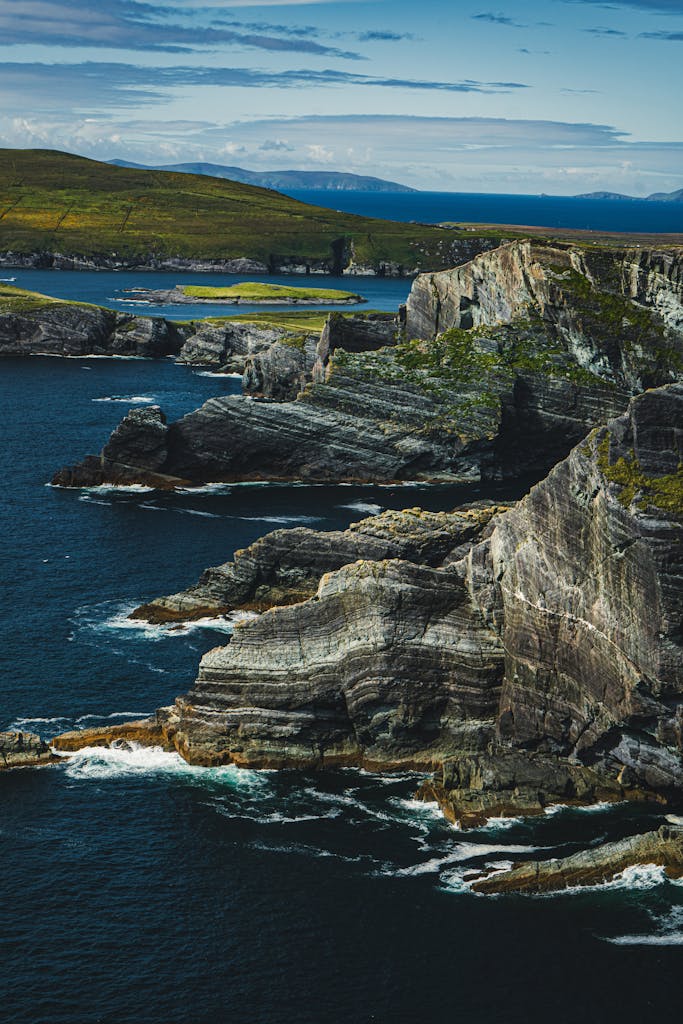
There are two other main alternatives we would suggest visiting along the Wild Atlantic Way. The first is Slieve League (Sliabh Liag) in County Donegal. Slieve League are probably our personal favourite and have a rawness and ruggedness that is rarely seen elsewhere. We always find Slieve league to be quite moody in terms of weather, with low lying mist and battering winds so do be prepared for that as well.
The second are the Kerry Cliffs in County Kerry. These cliffs stand at over 1000ft tall and again give the major advantage of being less crowded than the Cliffs of Moher. From here, you get incredible views of Skellig Micheal and Puffin Island but just be aware that there is a slightly steep walk before you reach the viewpoint here.
2 – Colourful Villages
One thing that we repeatedly state when people ask for advice about Ireland is that you will often find the countries character in its small villages much more than in its cities.
While we do recommend visiting Dublin and Belfast etc. we would encourage you to spend more of your time visiting the small, often colourful villages dotted around this route that will give you the real sense of warmth and comfort that Ireland is renowned for globally.
Cork
Some of our favourite colourful villages on the Wild Atlantic Way include Kinsale in County Cork. Here, you will find stunning views along the Old Head of Kinsale; beautiful bars and restaurants like Bulman’s and lots of bright colour throughout its streets. Kinsale is also the entry point to the Wild Atlantic Way. Nearby, we also love Allihies in County Cork, which sits perfectly perched between the mountains and the ocean.
Kerry
Next up we would suggest visiting Dingle in County Kerry, where we would suggest definitely taking this boat tour out around the islands, to see Cathedral Rock and maybe a dolphin or two. Go for a drink at Dick Mack’s pub, get an ice cream at Murphy’s and get fresh fish & chips .
We also have a more detailed guide to Dingle if you want to plan a day there. Not a colourful village as such but while you’re in Kerry make sure to visit Killarney for a really atmospheric town and another beautiful village in Kerry, Kenmare.


Clare
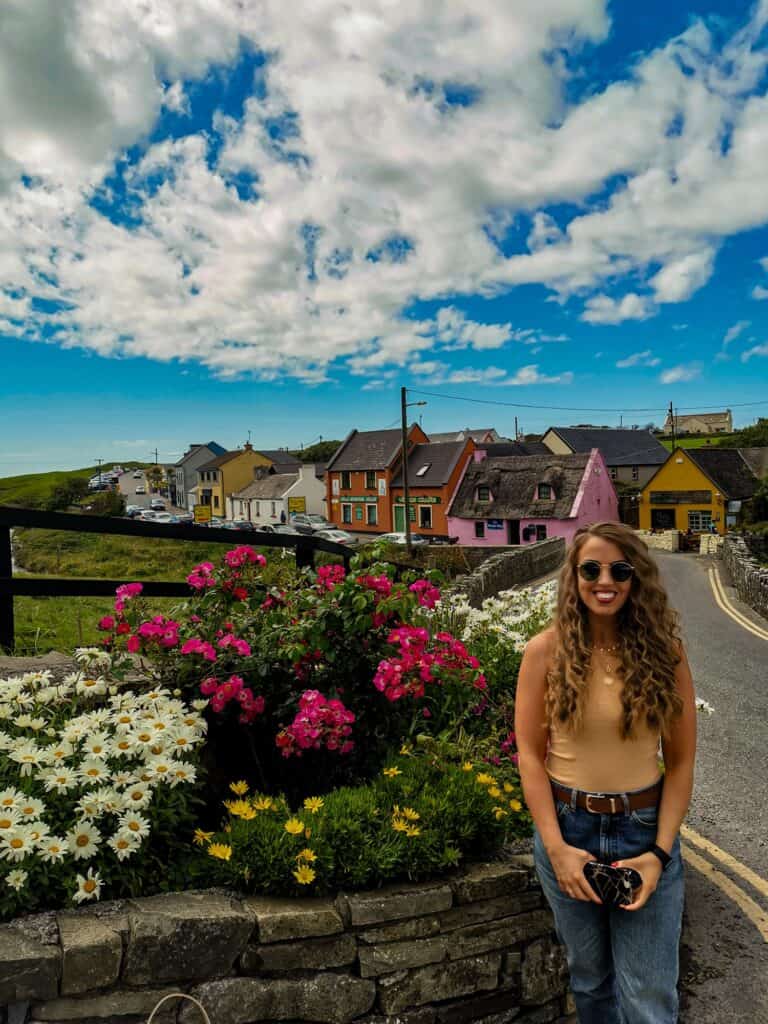
One of the most colourful villages in Ireland can be found in County Clare. Doolin is just a short drive from the Cliffs of Moher so it tends to attract a lot of visitors on that basis alone but it is worth adding to your list of things to do on The Wild Atlantic Way regardless. The village is home to a 2 Michelin Star restaurant, the Homestead Cottage, which is well worth booking if you are a foodie.
Galway
In Galway, while we love the city itself, if you want to visit some of it’s homely villages, we would recommend heading towards the Sky Road in Connemara where you will find the beautiful villages of Roundstone and Clifden. If you are travelling by car from Galway City you will naturally be able to follow this loop taking you along Connemara National Park towards Kylemore Abbey.
Mayo
Although not a village, one of the most beautiful colourful locations in Ireland is Westport in County Mayo. This picturesque town sits beneath Croagh Patrick, one of Ireland’s highest mountains. The town itself is full of character, with lots of great bars and restaurants and all the charm and simplicity that makes smaller locations in Ireland so enticing.
3 – Beaches (Coumeenoole; Gurteen Bay; Dogs By; Keem Beach; Murder Hole Beach)
Given Ireland’s climate, beautiful beaches aren’t necessarily the first thing that comes to mind when you think of visiting here. Granted, if you do visit an Irish beach on a day that is very sunny with little to no wind, we would recommend you also do the lottery that day as well.
While we can’t do much about the wind, we can guarantee you that there are some stunningly beautiful beaches along this coastline. There are actually so many beaches we could recommend but below are just some of our favourites.
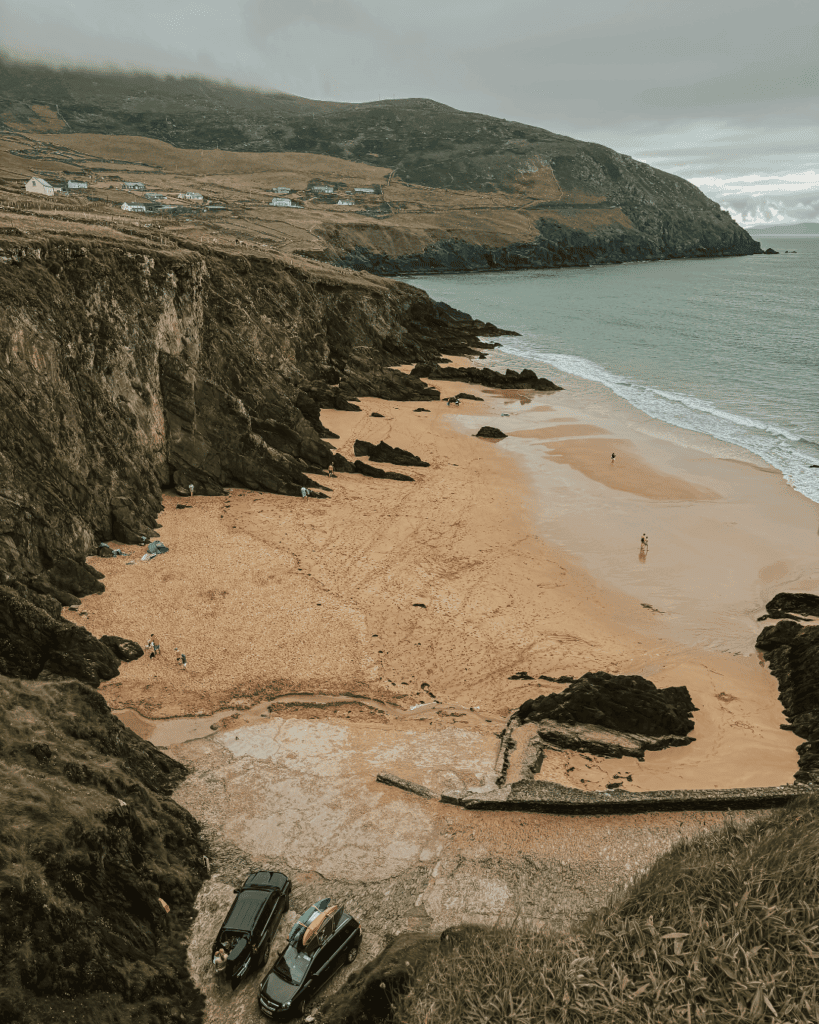
The first one we would recommend visiting is Coumeenoole Beach in County Kerry. This beach is just a few minutes drive from Dunquin Pier (which is also on this list) and has the perfect balance that many of these beaches offer of golden sand contrasting against a rich green, mountainous background. We also love O’Carroll’s Cove in Kerry.
In Cork, take a drive to Inchydoney or Garrettstown beach. From Garrettstown you will also have beautiful views of the Old Head of Kinsale and this beach is very popular with surfers in the area. Equally, Inchydoney is a beautiful place for a morning swim or a scenic walk before heading on to explore West Cork further.
Next up we would suggest Gurteen Beach & Dogs Bay in County Galway. These two beaches sit by side just outside the beautiful village of Roundstone and unlike some of the other beaches in the region, the water here is crystal clear against white sand. Again, one of the great things about these beaches is that they lead to one of our other recommendations, which is a road trip along the Sky Road leading to Kylemore Abbey.
Next, you have to visit Keem Beach. This picture perfect location is on Achill Island, just off the coast of Galway. The beach was recently voted as one of the most beautiful beaches in the world and it is easy to see why. If you do go here, take a short hike to the lookout post overlooking the beach to get a perfect view. Achill Island is blessed with lots
Finally, in Donegal, if we could only pick one beach it would be Murder Hole Beach (not as ominous as the name suggests). It was previously quite difficult to access the beach but in recent times a car park has been added to provide an easier route.
The beach itself is stunning, again another beach along the Wild Atlantic Way that provides that beautiful contrast of golden sands against a rugged green backdrop. Donegal has no shortage of incredible beaches, we would also recommend Silver Strand, and Portnoo., both of which are quite close to Slieve League.
4 – Road Trips (Beara Peninsula; Ring of Kerry; Inishowen 100; Loop Head)
While the Wild Atlantic Way is the Ultimate Irish road trip in itself, there are a number of mini road trips that we would recommend taking within the route.
Starting in County Cork, the Beara Peninsula is raw and moody, stretching over 90 miles straddling between Cork and Kerry. The route takes in the beautiful village of Allihies, Ireland’s only cable car at Dursey Island and one of Ireland’s most unique locations, Garnish Island just off the coast.
In Kerry, there are a number of great road trip routes, with perhaps the most famous of those being the Ring of Kerry. The stunning route can be done in a day with good planning but it will require an early start if you drive it to avoid being in a huge rush between stops.
There are 20+ places you could easily stop at along the route but to allow time to enjoy each we would suggest the main highlights are Muckross Abbey, Torc Waterfall, Ross Castle, Derrynane Beach, the Kerry Cliffs, Valentia Island and Rossbeigh Beach. We would also highly recommend taking the Slea Head drive and visiting the Gap of Dunloe while you are in Kerry.
Further up the coast in County Clare, the Loop Head drive takes in some beautiful scenery including the Bridges of Ross and the Cliffs of Kilkee before finishing up at Loop Head lighthouse. This is one of the lesser know scenic drives in the region but every bit as beautiful as the alternative options.
In Galway, the Sky Road takes in a lot of the locations we recommend throughout this guide. While you will start the route in the village of Clifden, if you are coming from Galway you will also likely take in Gurteen Beach; Dogs Bay, Roundstone, Connemara National Park, Clifden Castle and Kylemore Abbey along the drive. The drive itself
Finally, in Donegal, possibly Ireland’s most scenic route is the Inishowen 100, a stunning coastal drive which takes in some of the best sights in Ireland. Through taking this route, you will get to visit Ireland’s most Northerly point at Malin Head, beautiful waterfalls like Glenevin Waterfall and some of Ireland’s best beaches at Buncrana, Lisfannon and Culdaff.
OTHER RECOMMENDED POSTS
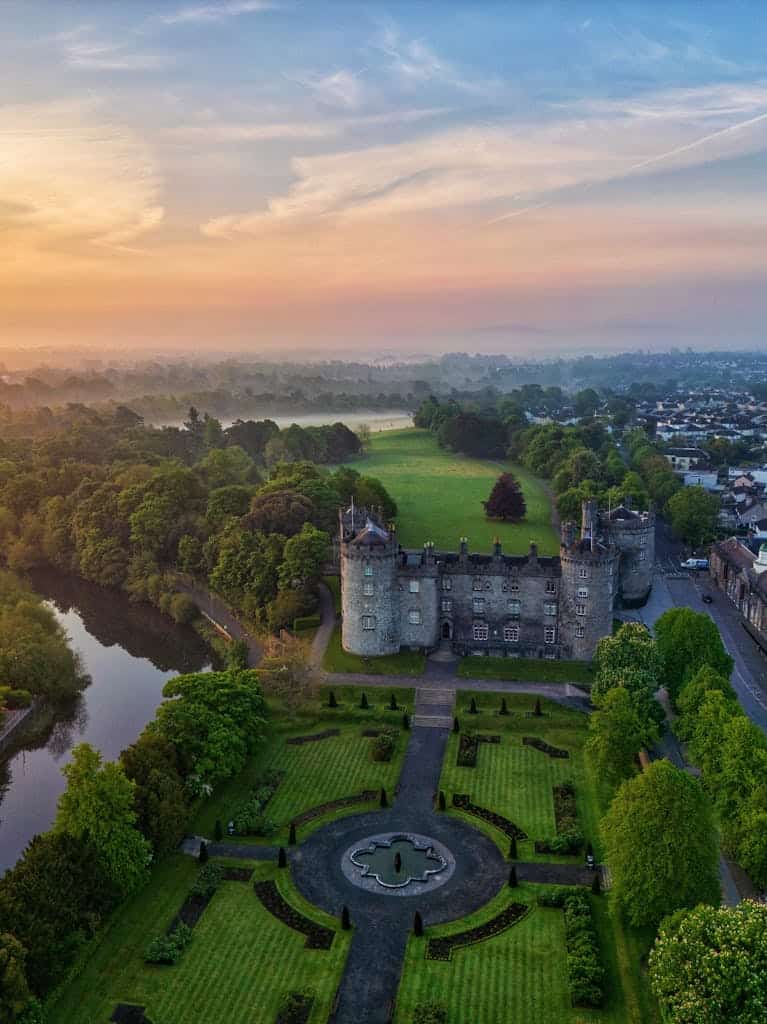
How to spend 7 days in Ireland
This guide will take you through everything you need for planning the perfect trip for a week in Ireland. The guide includes how to get around, where to stay & restaurant recommendations for your trip to Ireland.
5 – Discover the Islands (Aran & Achill)
One thing that is sometimes overlooked when planning a Wild Atlantic Way itinerary are the islands of Achill and Aran, sitting off the coast of Mayo and Galway respectively. The Aran Islands made up of Inishmore, Inishmaan and Inisheer are unique as well in that unlike most areas in Ireland, the islands have retained the Irish language as the main spoken word.
Achill is home to possibly Ireland’s most beautiful beaches, Keem Beach and Keel Strand. Just an hour away from Westport by car, Achill is the perfect place to see white sandy beaches, a beautiful coastline and some great hiking trails, ideal for anyone who loves the outdoors.
6 – Epic Landmarks (Downpatrick Head; Kylemore Abbey, Benbulben; Gleniff Horsehoe and Dunquin Pier)
There are no shortage of incredible views and landmarks on the Wild Atlantic Way. While we will look at castles separately, it is these locations that set the Wild Atlantic Way apart for us.
Starting in the South, we would suggest visiting Bantry House in County Cork. Bantry House is a stunning estate and gardens overlooking Bantry Bay. Just a short drive from Bantry House, you will find one of Ireland’s most unique locations – Garnish Island. In order to get here, drive to Glengarriff, where you can take the short ferry across the bay to the island, costing around €15.
Next, no trip to Dingle would be complete without taking the short drive out to the peninsula to see Dunquin Pier. Taking the Slea Head drive in Kerry is well worth it in itself with lots of other great locations along the route including Coumeenoole Beach but the star of the show along this route is Dunquin Pier. The unique
In a similar vein, another unique rock formation that emerges from the sea is Downpatrick Head in County Mayo. This unique sea stack formed by separating from the mainland in the 1300’s meaning you can see all of the unique layers of rock that form the land. Take caution when you visit, there is nothing guarding the edge and it gets extremely windy here at times so do not get too close to the edge.
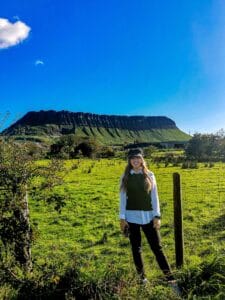
In Sligo, one of our favourite places to visit in Ireland is Gleniff Horsehoe. There is something so pure and authentically Irish about this 10km loop that we make a point of going back every time we are nearby. Nearby, you will also find the unique flat top mountain of Benbulben and we would highly recommend doing the forest walk if you are planning to spend time in the area.

Finally, while you are exploring Galway and the Connemara region, make sure to visit Kylemore Abbey. This incredible residence has been home to Benedictine nums since the early 20th Century and attracts thousands of visitors every month. The gothic style facade perched on the lakeside makes this place immediately catch the eye. Entry to the Abbey is €18 for an adult ticket.
DON’T FORGET
Read our other Ireland guides
- How to spend 2 days in Dublin
- How to spend a day in Dublin
- Things to do in Dublin at Christmas
- Where to stay in Kerry
- How to spend a day in Dingle
- 40 things to do in Ireland at Christmas
- How to spend a day in Belfast
- How to spend 2 days in Belfast
- Things to do in Dublin
- Things to do in Belfast
- Best hotels in Belfast
7 – Castles (Doonagore; Classiebawn; Ross Castle)
Another thing Ireland is renowned for are its ancient castles and the Wild Atlantic Way has lots of great options for you to visit.
While I personally prefer to variety of castles that can be found on the Causeway Coastal Route, there are still a few castles we love visiting on the Wild Atlantic Way. Two of our favourites are Doonagore Castle in County Clare and Classiebawn Castle in Count Sligo, for very similar reasons, the background.
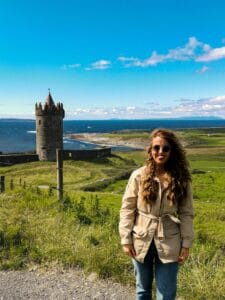
Doonagore is just a mile South of Doolin so you will likely be visiting as you pass through. The road to it is quite narrow, hilly and windy so do take your time if you are unfamiliar with Irish roads. The castle has a quite unique architecture and because it sits uphill, you get a stunning view of the Atlantic Ocean that sits behind the castle.
Similarly, Classiebawn provides an even more dramatic backdrop with the beautiful landscape of Benbulben sitting behind it. The castle itself has a contentious history, more widely renowned for its links to the assassination of Lord Mountbatten in the 1970’s. If you are a keen photographer, this is one of the most photogenic places we have visited in Ireland, particularly when you compress the background of Benbulben against the castle.
We would also recommend stopping off at Ross Castle in Kerry, as well as Dunguaire Castle in Galway.
8 – Don’t go chasing waterfalls (The Devils Chimney; Assaranca Waterfall; The Secret Waterfall; Glencar)
If waterfalls are your thing, then the Wild Atlantic Way has plenty to offer. The first one you need to have on your list is the Devils Chimney in County Sligo. This is Ireland’s tallest waterfall and takes its name from the fact that it often gets so windy here that the water starts to blow in the opposite direction. It takes about 45 mins to get here from your car and you should visit the day after/of rainfall to get the benefit of your visit.
Just a few minutes from the Devils Chimney, you will find Glencar Waterfall, which straddles between Sligo and Leitrim and is much more accessible than the taller waterfall. There is a car park just in front of the water that you can use and from there it is a 5 minute walk to the waterfall. So if you are short on time or simply don’t want to do the longer walk, check out Glencar Waterfall instead.
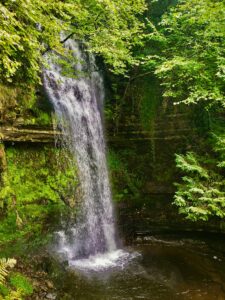
Further up the coast, there are two waterfalls in Donegal that also have to be on your list. The first is known as the ‘Secret Waterfall’ found in the small village of Largy. It’s known as the hidden waterfall as it is found hidden inside a cave and can only be reached during a low tide, so make sure to check this in advance to avoid getting into difficulty.
Our final suggestion would be Assurance Waterfall in Donegal as well. This one is much less hidden but no less impressive. This beautiful waterfall can be found a 20 minute drive from Ardara and because it is located on the side of the road, making it a much more accessible option than the secret waterfall.
9 – Take a hike (Croagh Patrick; Caurontoohill; Queen Maeve’s Trail)
No, that isn’t an insult, we’re actually just encouraging you to go hiking. Ireland is blessed with stunning hiking trails and no more so than along the Wild Atlantic Way
One thing we will say, and this goes for Ireland in general, pack lots of layers for going on a hike and very comfortable footwear. Ireland’s weather is notoriously changeable and this will be even more evident on a hiking trail. Lots of relatively light layers that are easy to change in and out of are key to surviving days that often include all 4 seasons at one point or another.
There are three hikes we would highly recommend doing based one experience, as well many others that you can easily add to your itinerary as well.
Carrauntoohil
In Kerry, you will find Ireland’s tallest mountain and one of its most impressive hikes. We haven’t hiked Carrauntoohil ourselves but it has been on our list for a long time. We would only recommend doing this hike if you are quite comfortable with longer hikes, as this one will typically take 4-6 hours to get up and down and does have loose stone and sharp inclines in places.
For an alternative, we would also recommend Sauce Creek, which is a great option for anyone visiting the Dingle Peninsula which has amazing views of the Atlantic coastline below and takes a bit less time to complete.
Croagh Patrick
Similarly challenging is the hike of Croagh Patrick in County Mayo. This mountain provides a beautiful backdrop to the town of Westport but also provides the opportunity to do one of Ireland’s most impressive hikes.
Similar to Carauntoohill, we would only really recommend hiking Croagh Patrick if you are comfortable with hiking, as it isn’t what we would necessarily class as being a ‘casual’ hike. This trail takes around 3-4 hours to complete and you should ensure to have god hiking boots and multiple layers to be prepared for the changeable weather.
Croagh Patrick is known as Ireland’s ‘holiest’ hike, ultimately leading to a beautiful small chapel when you reach the summit as well as stunning views of Clew Bay below. The legend surrounding this mountain is that it is from here that St. Patrick banished the snakes from Ireland in the 5th Century.
Queen Maeve’s Trail
Finally, for a shorter hike, we would recommend doing Queen Maeve’s trail in County Sligo. This 2.5km is guided by 500 steps along the trail leading you to the summit of Knocknarea. This hike should take around 2 hours in total, making it more accessible than the previous two and the incline isn’t as sharp, albeit still a fairly strenuous option. From the top, you will have perfect views of Rosses Point and Benbulben.
10 – Go Surfing
Last but by no means least, you could appeal to your adventure seeking side by trying out some surfing. Surfing has become increasingly popular in Ireland in recent years and some of the best destinations in Europe can be found along the Wild Atlantic Way. The areas of Mullaghmore Head in County Sligo, twinned with Bundoran show off much of what makes this route so ‘wild’ in the first place.
The waves here are raw and powerful and the water here from the Atlantic is often very cold. This area has become a surfers paradise in recent times and we can definitely see the appeal. While we don’t surf ourselves, eve if you wanted to try something new, The Wild Atlantic Way is the place to do it. Nearby, Strandhill Beach in Sligo is another great option if you want to try out surfing.
If you are new to surfing, we would encourage you to get lessons in somewhere like Lahinch in County Clare and definitely don’t do it unsupervised.
We hope you have a great time in the Wild Atlantic Way and if you need some help planning a route, check out our 3 day itinerary.

DON’T FORGET
Avoid roaming charges
We all love to use our phones while we travel so make sure you get an eSim before you go to avoid high roaming charges during your holiday in Ireland
When is the best time to visit Wild Atlantic Way?
In our experience the best time to visit Wild Atlantic Way is May or September. This is when Wild Atlantic Way tends to get its more predictable weather overall.
Can I use my phone in Wild Atlantic Way?
We would recommend purchasing an eSim card for your stay in Wild Atlantic Way if you are visiting from abroad.
Can I stay in the Wild Atlantic Way on a budget?
It is possible to visit Wild Atlantic Way on a budget. We have provided some hotel recommendations above that may be suitable.
What should I pack for a day in the Wild Atlantic Way?
The weather in Ireland is renowned for having all 4 seasons in a day so the key for packing for the Wild Atlantic Way is layers. Bring a hat, gloves, a winter coat and anything else needed to keep you warm in the winter. Ireland also has a pretty strong wind chill throughout the year so it can often feel colder than the given temperature.
What is the best airport to fly into for the Wild Atlantic Way
The best airport to use in this area is Shannon, which is a short journey from many of the major sites along the route. You can also use Dublin but it is a 2-3 hour drive depending on where you choose to stay.

Thank You!!
This article contains affiliate links, meaning if you purchase anything via the recommendations below we will receive a small commission. This does not affect the price you pay in any way but will support us to continue posting more guides.